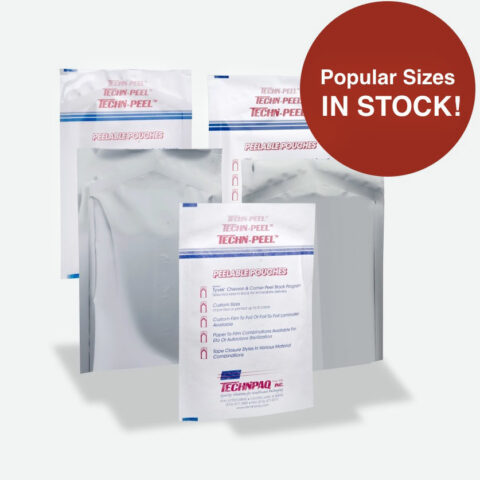
If you’re specifying packaging for a medical device, the Tyvek pouch is almost certainly part of the conversation. It’s the standard sterile barrier format across Class I and Class II devices, used from orthopedic instruments to single-use diagnostics. But the material choice inside that format matters more than most teams account for early in development.
DuPont produces several grades of Tyvek for medical use, each with different physical properties and sterilization behavior. They’re available in a range of sizes to accommodate different device dimensions, and are compatible with sterilant gases, supporting a variety of sterilization methods. The wrong grade choice can create seal quality problems, validation failures, or incompatibility with your sterilization process.
Table of Contents:
- What is a Tyvek Pouch?
- DuPont Tyvek Grades for Medical Packaging
- Sterilization Compatibility by Tyvek Grade
- Pouch Design Options for Medical Devices
- How Tyvek Pouches Maintain Sterile Barrier Integrity
- Selecting the Right Tyvek Pouch for Your Device
What Is a Tyvek Pouch?
A Tyvek pouch is a sterile barrier packaging format made from DuPont’s flash-spun, nonwoven high-density polyethylene (HDPE) material. One side of the pouch is Tyvek; the other is typically a clear film or foil laminate. Heat sealing bonds the two materials together, creating a package that maintains sterility from the point of packaging through to the point of use.
It’s made of high-density polyethylene (HDPE), which is extremely stable when exposed to sterilant gases and high-energy sterilization processes. Tyvek pouches are made of 100% recyclable HDPE and can be processed through standard #2 HDPE plastic recycling streams.
The defining property of Tyvek in this context is its porous structure. The material allows sterilizing gas to pass through while blocking microbial penetration. That combination of breathability and barrier performance is what makes Tyvek pouches compatible with gas sterilization methods like ETO, and with radiation methods like gamma and e-beam.
Tyvek pouches are manufactured in peelable configurations, meaning the seal opens cleanly without tearing fibers or generating particulates. That clean peel is a functional requirement for aseptic presentation. During opening, the device transfers from the sterile field inside the package to the sterile field inside the procedure room, and any particulate contamination generated during that transfer creates a risk.
DuPont Tyvek Grades for Medical Packaging
DuPont produces three Tyvek grades commonly used in medical packaging: 1073B, 1059B, and 2FS. Each has distinct structural properties that affect performance in specific applications.
Tyvek 1073B
Tyvek 1073B is the workhorse of medical device packaging. It has a higher basis weight and density than 1059B, which translates to stronger microbial barrier performance, greater puncture resistance, and better durability under physical stress during distribution.
1073B is the right choice when your device has sharp edges, protrusions, or surface features that could contact the packaging during handling and shipping. It’s also the standard selection for Class II devices where regulatory scrutiny of the sterile barrier system is higher. The material’s strength profile means it holds up in secondary packaging, during transportation vibration and shock testing, and across extended shelf life validations.
Tyvek 1059B
Tyvek 1059B is a lighter-weight grade, engineered for devices and healthcare products that don’t present sharp-edge or abrasive-surface challenges to the packaging. The reduced basis weight lowers material cost and can improve seal quality on certain packaging lines, particularly where lower sealing pressure is preferred.
1059B is well suited to smaller, simpler devices, diagnostic components, and pharmaceutical packaging applications where the physical demands on the pouch are lower. If your device is smooth-surfaced and lightweight, 1059B often provides the right balance of protection and processability.
Tyvek 2FS
Tyvek 2FS is a coated grade, with a coating applied to the surface to improve heat-seal performance and processability on high-speed packaging lines. It’s selected when converting efficiency, seal consistency, or compatibility with specific sealing equipment is the priority. 2FS produces clean, uniform seals across a broader sealing temperature range than uncoated grades, which reduces the risk of seal defects in high-volume production runs.
Sterilization Compatibility by Tyvek Grade
Tyvek’s porous structure makes it compatible with three primary sterilization methods used in medical device manufacturing. Understanding how each method interacts with the material helps you align your packaging specification with your sterilization protocol from the start, rather than discovering incompatibility during validation.
Ethylene Oxide (ETO)
ETO is the most common sterilization method paired with Tyvek pouches. The gas penetrates the porous Tyvek layer, achieves contact with the device, and then dissipates through the same material after the cycle. Both 1073B and 1059B are fully compatible with ETO. The key requirement is that the packaging material maintains its porosity through the full cycle, including any pre-conditioning and outgassing phases.
Tyvek’s performance in ETO is well-characterized and extensively validated across the industry. If you’re bringing a new device to market and haven’t yet locked your sterilization method, ETO with Tyvek is often the path of least validation resistance.
Gamma Radiation
Gamma radiation passes through packaging materials to sterilize the product inside. Tyvek is compatible with gamma, though radiation exposure at high doses can affect the material’s physical properties over time. Most medical Tyvek grades are validated for gamma sterilization up to standard dose ranges, and many converters offer gamma-stable laminate combinations designed to maintain integrity through multiple radiation cycles.
For devices that require high radiation doses or repeat sterilization, specifying a gamma-stable laminate structure with the Tyvek pouch is important. Validation testing should account for the maximum intended radiation dose.
Electron Beam (E-Beam)
E-beam sterilization delivers radiation at higher dose rates than gamma and is typically used for single-pass sterilization of high-volume, uniform products. Tyvek is compatible with e-beam sterilization. Like gamma, the concern is cumulative dose and material degradation over the product’s shelf life. Packaging validation for e-beam should include accelerated aging studies that bracket the anticipated dose range.
Steam/Autoclave
Standard Tyvek grades are not compatible with steam autoclave sterilization. The high heat and moisture environment of autoclave cycles can compromise Tyvek’s structure and seal integrity. If your device requires steam sterilization, Technipaq offers sterilization preparation pouches using medical-grade paper or film combinations specifically designed for autoclave compatibility.
Pouch Design Options for Medical Devices
Beyond material grade and sterilization compatibility, Tyvek pouches come in several configurations that affect both manufacturing practicality and clinical usability.
Chevron Pouches
The chevron seal is a V-shaped end seal that makes the pouch easier to open, directing the peel toward the center of the package. It’s a common configuration for single-use devices where clinical staff need to open the package quickly and one-handed. Chevron design also helps reduce the risk of the film tearing inward toward the device during opening.
Header Pouches
Header pouches, also called header bags, use a rigid or semi-rigid header panel to provide structure and a hang hole for display or storage. They’re well suited to larger or heavier devices where a flat pouch format won’t provide adequate support. The Tyvek or film material forms the body of the package, with the header providing rigidity at the top.
Corner Peel Pouches
Peelable pouches with corner peel configurations open from a corner rather than a straight edge, which some clinical users find easier to manipulate while maintaining sterile technique. This format is often specified where the device presentation angle matters or where the opening sequence needs to be controlled.
Working through pouch design or material selection for a new device?
Technipaq’s team works with medical device companies at the R&D and validation stages to match the right Tyvek grade and pouch configuration to the device, sterilization method, and distribution requirements. Request a sample or reach out at technipaq.com.
How Tyvek Pouches Maintain Sterile Barrier Integrity
A sterile barrier system has one job: keep the product sterile from the point of packaging to the point of use. The Tyvek pouch contributes to that in several specific ways.
The porous structure of Tyvek allows sterilizing agents to reach the product during processing, then provides a microbial barrier that blocks bacterial spores and contaminants from re-entering after sterilization. The material’s nonwoven construction means there are no organized fiber pathways for contamination to travel along, unlike woven materials.
Seal integrity is the other critical variable. A pouch with clean, consistent seals across its entire perimeter maintains the sterile barrier through distribution stresses, including vibration, compression, and pressure changes during air freight. Technipaq’s peelable pouches are designed to produce clean peel with no fiber tear or particulate generation at the point of opening, which is where many sterile barrier failures actually occur in clinical practice.
Shelf life validation is the third pillar. Tyvek pouches support extended shelf life because the material is stable, does not off-gas or degrade in storage, and maintains its barrier properties over time when the seal remains intact. Accelerated aging studies for Tyvek-based packaging typically use ISO 11607 as the standard framework, and the material’s track record across the industry means the testing protocols are well established.
Selecting the Right Tyvek Pouch for Your Device
The selection process comes down to four variables: the device’s physical characteristics, the sterilization method, the distribution environment, and the regulatory classification.
- Device physical characteristics: Sharp edges, protrusions, and abrasive surfaces push toward 1073B. Smooth, lightweight devices can often use 1059B. Physical demands on the packaging during distribution matter as much as the device geometry itself.
- Sterilization method: ETO, gamma, and e-beam are all Tyvek-compatible. Lock the sterilization method before finalizing the material spec, and confirm the laminate combination is validated for your intended dose or cycle parameters.
- Distribution environment: Devices that travel long supply chains, are exposed to temperature extremes, or go through multiple handling points need packaging validated to those conditions. Tyvek’s durability profile makes it well suited to challenging distribution environments, but the laminate and seal design need to match the specific stresses.
- Device classification: Class II devices typically require a higher level of packaging documentation and may face more scrutiny during regulatory review. Starting with 1073B for Class II is common practice and reduces the risk of questions about barrier performance during submission.
If you’re early in development, getting a converter involved before you finalize your packaging specification is worth the time. Changes to material grade, pouch format, or seal design after validation begins are expensive. The right pouch for your device is the one that passes validation on the first attempt, performs in the field, and doesn’t generate problems at the point of clinical use.
Why Medical Device Companies Work with Technipaq for Tyvek Pouches
Technipaq has been converting DuPont Tyvek for medical packaging for close to 40 years. As an authorized converter, Technipaq works directly with 1073B, 1059B, and 2FS, plus proprietary Techni-Coat technology that applies specialized coatings to Tyvek to improve seal performance on high-speed lines and compatibility with a wider range of substrate materials.
The company specializes in short-run and R&D volume orders, which makes it a practical partner for validation-stage work where quantities are limited and iteration speed matters. ISO 13485 certification covers the full manufacturing process, from laminating and converting through sealing and final packaging.
Tyvek pouches from Technipaq are available in peelable configurations with up to eight-color flexographic printing, in rollstock, pre-formed pouch, and lidstock formats. The in-house laboratory supports seal strength testing, porosity verification, and burst resistance testing, which shortens the timeline between package design and validated production.
Frequently Asked Questions
What is a Tyvek pouch used for?
A Tyvek pouch is a sterile barrier packaging format for medical devices. It maintains sterility from the point of sealing through sterilization, distribution, and point-of-use opening. The porous Tyvek layer allows sterilizing gases to penetrate during ETO, gamma, or e-beam sterilization, then acts as a microbial barrier to prevent contamination after the sterilization cycle.
What Tyvek grades are used for medical devices?
The two most common medical Tyvek grades are 1073B and 1059B. 1073B offers higher basis weight, stronger puncture resistance, and better microbial barrier performance. 1059B is a lighter-weight grade suited to devices without sharp edges or significant packaging stress. Tyvek 2FS is a coated grade used primarily for high-speed production applications.
How do you choose between Tyvek 1073B and 1059B?
The main decision factors are device geometry, physical stress during distribution, and regulatory classification. Devices with sharp edges, protrusions, or abrasive surfaces typically require 1073B. Smaller, smoother devices in lower-stress distribution environments can use 1059B. Class II devices typically default to 1073B given its stronger barrier profile and established validation history.
Which sterilization methods are compatible with Tyvek pouches?
Tyvek pouches are compatible with ethylene oxide (ETO), gamma radiation, and electron beam (e-beam) sterilization. They are not compatible with steam autoclave sterilization. If your device requires autoclave sterilization, a different packaging material, such as medical-grade paper or autoclave film, is required.
What is medical grade Tyvek?
Medical grade Tyvek refers to DuPont Tyvek grades specifically designed and validated for sterile medical packaging applications. These grades, including 1073B and 1059B, meet the microbial barrier, porosity, and physical durability requirements for ISO 11607-compliant sterile barrier systems. Standard construction-grade Tyvek is not the same material and does not meet medical packaging requirements.
Ready to Specify Your Tyvek Pouch?
Technipaq works with medical device companies at the prototype, validation, and production stages to deliver the right Tyvek pouch for the device, sterilization method, and distribution requirements. Design your pouch or contact the team at technipaq.com to discuss your packaging project.